Supporting Global Construction Growth with Confidence, Clarity, and AI-Driven Innovation

By Natalie Lemke, CEO, RUX Software
Something unusual is happening in the construction industry right now, and if you’re paying attention, it’s genuinely exciting.
Two major forces are moving at the same time. The global construction market is in a sustained, significant growth cycle, driven by rising urbanization, infrastructure investment, and expanding demand across every major geography. And at the exact same time, AI technology is maturing fast enough to change how construction work actually gets done, at the equipment level, at the operations level, and at the decision-making level.
When I read Deloitte’s latest Global Powers of Construction report, I was struck not just by the scale of the opportunity but by the timing. It’s exciting for us to stand at the intersection of industry growth and operational opportunity as AI proliferates technology and unlocks measurable results we have already seen in the field.
What “Smart Construction” Actually Means on the Ground
We’ve arrived in the era of “smart construction.” What I mean by it is straightforward: technology embedded into the equipment and the workflows that perform specific tasks, reduce human error, and generate data that makes decisions better.
Connected equipment and sensors are now being delivered as stock components on new machines, capturing real-time data on machine health and performance. Machine learning algorithms are optimizing scheduling, utilization, and maintenance planning. Predictive risk modeling is helping project teams anticipate problems before they become delays.
We are past the pilot phase. Construction businesses that want to be competitive are using these tools. What was experimental two years ago is becoming operational backbone. And rental companies are sitting at the center of that transition.
Why it matters for the People Running These Businesses
Here’s what I keep thinking about when I talk to rental leaders in this space: the pressure on the humans running these operations is significant, and it’s compounding.
Demand for equipment is climbing. Labor is constrained. Assets have manufacturing cycles that take a long time and carry real cost. And right now, capital is expensive. The dollars required to buy new equipment, to sign new leasing agreements, to expand fleet capacity are more expensive to deploy than they were five years ago. That combination means every asset in a rental fleet is expected to stretch further than it ever has before.
The fleet manager who has real-time visibility into utilization, location, and maintenance status is making better calls faster with less guesswork. The operations team that gets an alert before a machine breaks down on a jobsite isn’t scrambling to replace equipment under pressure. The coordinator who can see demand patterns and move assets proactively is delivering a service experience that builds long-term customer relationships.
AI doesn’t replace those people. It removes the friction that keeps them from doing their best work.
What AI Is Actually Doing in the Rental Space Right Now
Predictive maintenance is using machine data, sensor readings, and historical performance trends to flag potential issues before they become costly breakdowns. Unplanned downtime gets cut. Equipment lifespan extends. More machines stay in the field generating revenue.
Usage analytics gives rental companies a clearer picture of how, where, and how often equipment is being deployed. That visibility allows for smarter fleet allocation, fewer idle assets, and the ability to move machines proactively instead of reactively.
AI-powered inspection and condition reporting is accelerating turnaround time. Image recognition and digital checklists are identifying damage faster, reducing disputes, and creating cleaner records for both contractors and equipment owners.
Forward-thinking rental companies are already reporting more predictable equipment performance, more accurate forecasting, and clearer insight into utilization patterns. These are the foundational changes revolutionizing how decisions get made.
The Workforce Angle That Doesn’t Get Enough Attention
One of the most persistent challenges I hear across the construction equipment rental space is workforce shortages. There are fewer experienced people entering the industry than there are retiring from it. The knowledge gap is real.
When automation and digital tools take over the routine and the repetitive, the people you have can focus on the work where human judgment, experience, and problem solving create actual value. This is the reality for businesses trying to scale in a labor-constrained environment.
The companies building AI into their workflows aren’t doing it to cut headcount. They’re doing it to make their existing headcount more effective, more sustainable, and better positioned to deliver the service levels that construction clients demand on complex, fast-moving projects.
What We’re Building for the Leaders Who Are Ready
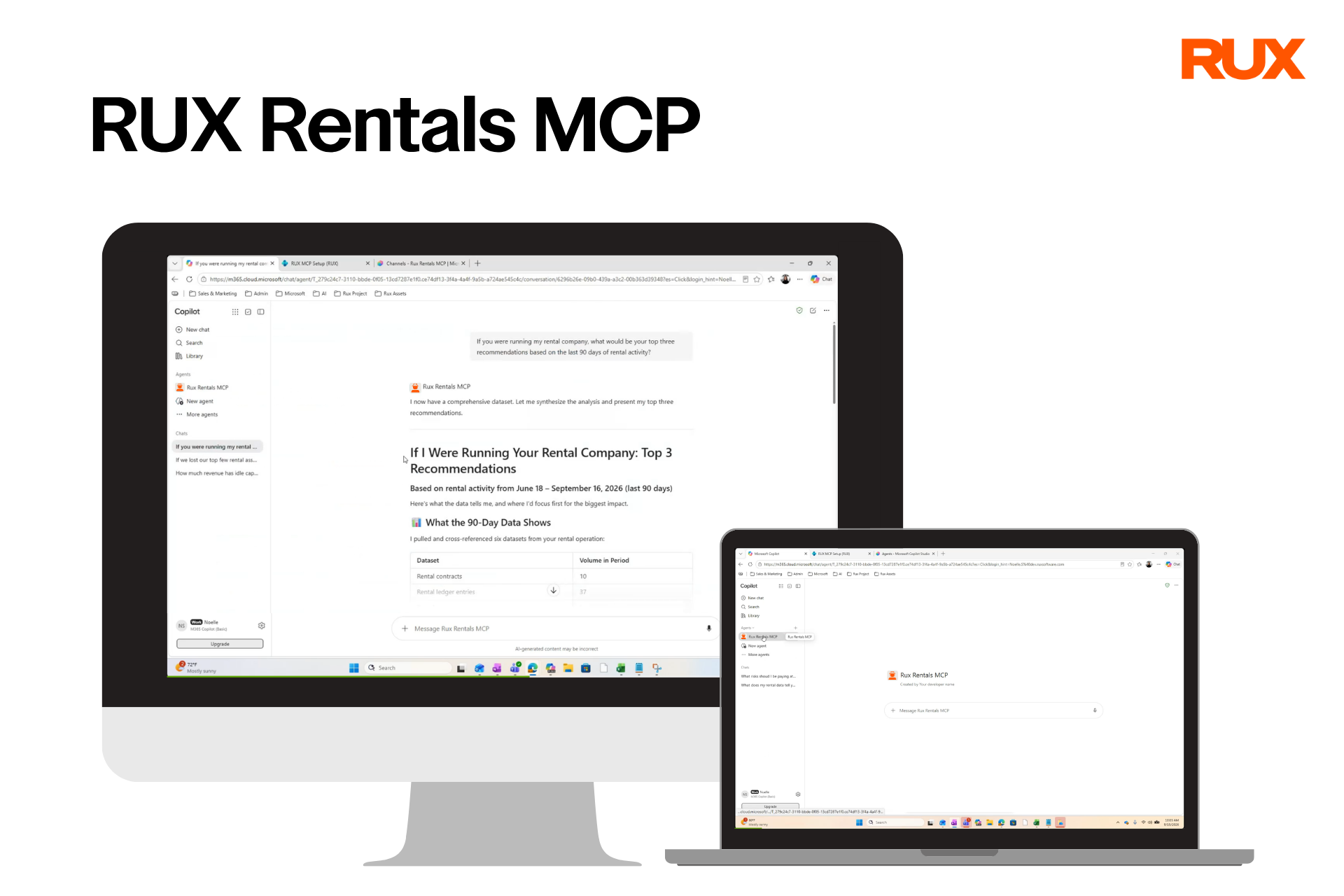
At RUX, we’ve designed RUX Rentals built for Business Central to help equipment rental businesses operate with confidence in exactly this kind of growth environment. It delivers robust fleet management, billing, utilization tracking, and customer engagement capabilities today. And over the coming months, we’re rolling out AI-driven enhancements that extend those capabilities further: predictive maintenance, utilization forecasting, automated service reminders, and optimized equipment deployment.
The clients we work with who have gone all-in on connected equipment and intelligent software tools are seeing it in their numbers. Above-average asset lifespan. Higher utilization. Incremental revenue from assets that used to sit idle. These aren’t small gains. In an industry where margins are tight and every efficiency point matters, they compound.
The Opportunity Is Real and the Window Is Now
Reading Deloitte’s report and watching the construction market move in real time leaves me genuinely energized. The global industry has proven it can absorb disruption and come back stronger. The equipment rental sector is well-positioned to play an increasingly strategic role as construction gets smarter, cleaner, and faster.
The tools you adopt, the data you leverage, and the way you build for AI integration will define your competitive position in the next decade. It’s already happening.
Here’s to building stronger, smarter, and with great purpose! Contact us if you’d like to discuss how AI technology can improve your construction equipment business.



Ready to take control of your operations?
RUX engineered oil and gas field service software to fit your operation—no patches, no guesswork. Business Applications built and configured for the oilfield service industry, our software solutions give you clarity and control to move forward with confidence.